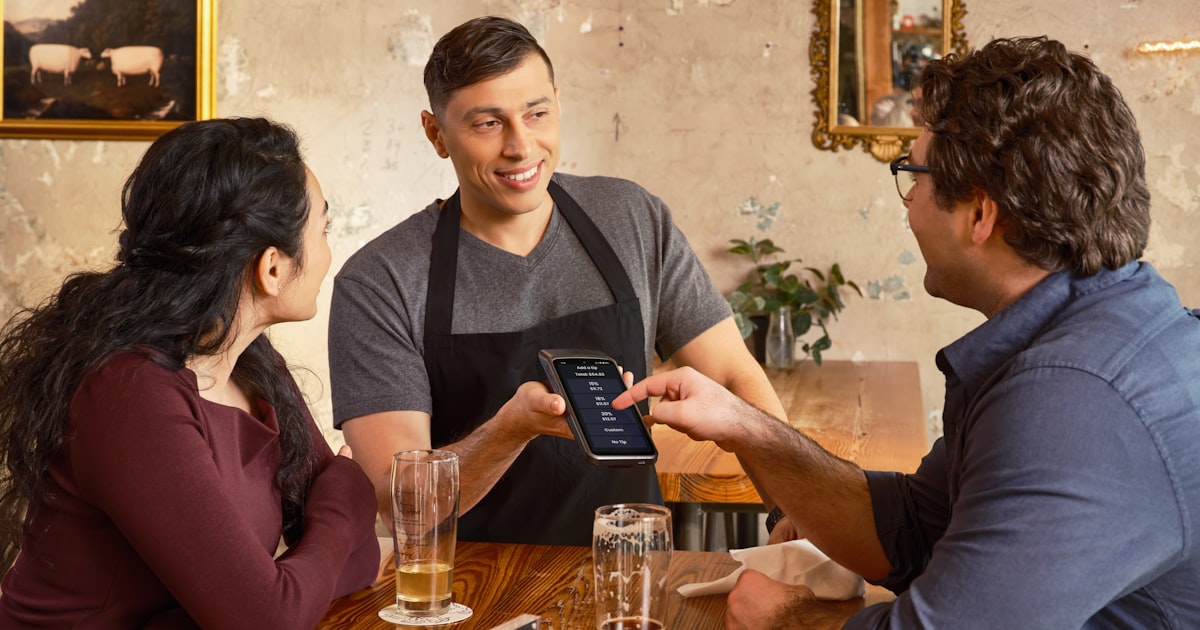
Your Own Food Delivery Without Commission: An Ordering App the Restaurant Owns
Delivery platforms do one thing really well: they bring you customers who didn't know you existed. The problem is that they charge a commission on every order — including the tenth one from someone who lives two blocks away and knows your menu by heart.
That's why more and more restaurants are building their own ordering and delivery system. Not as a replacement for Wolt, Bolt Food or Foodora, but as a second channel they actually own. This article covers what such a system needs to do, whether to start with a website or an app, how to bring customers over, and when not to bother.
If you're mainly after prices and payback, we have a separate breakdown: How much does a restaurant app cost.
Why restaurants are leaving commission-based platforms
The commission is only the first reason. Platforms typically take a double-digit share of each order — in our pricing article we work with 25–30%. With food, where margins are counted in small amounts per dish, that often means a big part of the delivery profit walks out the door.
The other reasons are less visible but just as important:
- The customer belongs to the platform. You don't have their e-mail or phone number. You can't send them the lunch menu or an offer for a slow Tuesday.
- You compete in the same list as everyone else. A customer who ordered from you once sees ten other places right below you next time.
- Someone else sets the rules. Commission rates, visibility fees and ranking can change without any say from you.
- You don't see all the order data. Yet who orders what, how often and when is the most valuable information for planning your kitchen.
Your own system flips this around. The order, payment, contact and history stay with you. You pay a fixed cost for running it, not a percentage of revenue.
What your own ordering system must do
Commission-free delivery doesn't rest on a pretty menu. It rests on an order getting from the customer to the kitchen and to the courier without anyone re-typing it. Here's the minimum that makes it work in real service:
| Part of the system | What it does | Why it matters |
|---|---|---|
| Menu | categories, photos, allergens, instant item switch-off | a sold-out dish must not be orderable |
| Cart | variants, sides, notes, minimum order | food isn't a product with one price |
| Payments | card, Apple Pay and Google Pay, optionally cash | paying upfront cuts cancelled orders |
| Delivery zones | areas drawn on a map, delivery fee, minimum amount | a long trip for a small order is a loss |
| Times and capacity | opening hours, delivery estimate, pause during rush | the kitchen must not promise more than it can cook |
| Kitchen overview | new orders in real time, printer or display | nothing gets lost in an e-mail inbox |
| Courier assignment | who delivers, address, phone, payment status | the courier copies nothing by hand |
| Notifications | confirmation, “on its way”, delays | the customer doesn't call asking where the food is |
| POS integration | the order lands straight in the POS | one receipt, one revenue figure, no mismatches |
Two things are underestimated most often.
Delivery zones. “We deliver within 5 km” isn't enough. A river, a motorway or one-way streets can turn 3 km into a half-hour trip. Zones are drawn on a map, each with its own delivery fee and minimum order.
POS integration. Without it, staff re-type orders from a tablet into the till, make mistakes during the rush and the takings don't add up in the evening. For restaurants running a POS such as Dotykačka or Storyous, integration is the difference between a tool that saves work and one that adds it.
Couriers: your own or hired
Own delivery doesn't mean you need a fleet. There are three common setups:
- One or two couriers of your own — typical for pizzerias and bistros delivering nearby. The system assigns orders to them and shows addresses on their phone.
- An external courier service at a fixed rate — the order is yours, the carrier just drives. You pay per trip, not a percentage of the order.
- Pickup only — the simplest start. The customer orders and pays online and collects at a set time. Even that saves the commission and the phone calls during the rush.
Live courier tracking and route optimization are useful extensions, but you don't need them on day one. For one courier and ten orders an evening, clear assignment and a customer notification are enough.
Website or mobile app?
This is the most common question, and the answer is almost always the same: start with the web.
An ordering website works on any phone without installation. You link to it from your Google Business Profile, Instagram, a QR code on the table and a card in the bag. Nobody has to download anything to order for the first time.
A mobile app adds things the web does less well:
- push notifications — the lunch menu or a promotion straight on the lock screen,
- saved addresses and favourite orders — a repeat order in two taps,
- a loyalty program — points and rewards always at hand,
- an icon on the home screen — a reminder that you can order somewhere other than the platform.
But only people who already know you and order regularly will download an app. That's why it makes sense as a second step, once you have a regular base. A progressive web app can be a middle ground — we compared the options in PWA vs. native apps. And how to use notifications without people switching them off is covered in our article on push notifications.
How to bring customers over from the platform
Your own system without customers is just a nice website. Moving people over doesn't happen in one go — it happens consistently, at every touchpoint:
- A clear benefit for ordering direct. Free delivery, a lower price or a gift with the first order. People switch when there's something in it for them.
- Loyalty points only in your own channel. The tenth pizza free only works where you know the customer.
- A QR code at the counter and on tables. A guest sitting in your restaurant is the best candidate for the next order at home.
- Google profile and social media. Make the “Order” button lead to your site, not to the platform.
- Packaging for your own orders. A card with a link and a code for the next order. For platform orders, check your contract terms first to see what you're allowed to add to the bag.
Measure how many orders come through your own channel and how many of those are from repeat customers. That's the number that tells you whether the strategy is working.
When own delivery pays off — and when it doesn't
An own system isn't for everyone. Honestly:
| Worth it when… | Probably not worth it when… |
|---|---|
| you have regulars who order repeatedly | delivery is a marginal part of revenue |
| you have capacity for your own courier or pickup | you have no one to deliver and no room for pickup |
| you want to build your own customer database | most orders are one-off (tourists, passing trade) |
| you plan a loyalty program or more locations | you have no time to promote it to your own guests |
For most restaurants the best option is a hybrid model. The platform stays as an acquisition channel — it brings in new people who don't know you. Your own channel is for regulars, where paying a commission makes no sense. You then pay commission for a new customer, not for a regular. That's a major difference in delivery economics.
You'll find the calculation of when your own system pays for itself in How much does a restaurant app cost — including a model example and a two-year comparison.
How to start
The sensible approach is step by step: first an ordering website with the menu, payments and pickup or local delivery. Then POS integration and courier assignment. The mobile app and loyalty program come once you know how many people order repeatedly.
We describe the full solution for food businesses — ordering, delivery, reservations and QR menus — on the restaurant apps page. You can get an indicative price for your operation in two minutes in the configurator. And if you want to check whether own delivery pays off for you specifically, book a consultation — we'll go through your orders and tell you straight when it makes sense to start.