Custom App Development: When It Pays Off, What It Costs and How to Choose a Vendor
A custom app is software built precisely around your processes. As a one-time agency project it costs anywhere from tens of thousands of crowns for a simple web application to CZK 1.5 million and more for a complex system. On a monthly subscription, a web application starts at CZK 1,990 and a mobile app for iOS and Android at CZK 29,990 per month. Whether it pays off, though, isn't about the price. It's about the problem you're solving.
This guide puts the essentials in one place. When building your own app makes sense and when it's money down the drain. What it costs. How development works. And what to ask a vendor so you don't end up paying for the app twice.
What a custom app actually is
A custom app (also called bespoke or made-to-order software) is built for one specific company. You're not buying a finished product sold to thousands of customers. You're commissioning a system that mirrors the way you work.
It comes in a few shapes:
- Web application. Runs in the browser, users log in and work with data. Think bookings, CRM, job management, client portals.
- Mobile app. For iOS and Android, published in the App Store and Google Play. For customers, club members or field technicians.
- Internal company system. Replaces spreadsheets, paper and copying data between systems by hand. Approvals, inventory, attendance, scheduling.
They all have one thing in common: you don't adapt to the software, the software adapts to you. And the code and data belong to you, not to a licence vendor.
When a custom app pays off, and when it doesn't
A custom app isn't automatically the better choice. Plenty of problems already have ready-made tools that are cheaper and can be rolled out in a week. Comparing the three routes side by side helps:
| Off-the-shelf (SaaS) | No-code | Custom app | |
|---|---|---|---|
| Time to deploy | days | days to weeks | weeks to months |
| Cost at the start | low | low | higher |
| Cost as your team grows | grows per user | grows per user | you pay for the system, not per head |
| Your own logic and processes | only what the product supports | up to a point | no limits |
| Integrations | only built-in connectors | only built-in connectors | anything, including local software |
| Customer-facing app under your brand | limited | rarely | yes |
| Moving to another solution | data yes, configuration no | data yes, logic no | code and data are yours |
In practice, one question does most of the work: do you run this process differently from your competitors, and does that make you money?
If not, buy off the shelf. Holiday tracking, invoicing or a shared calendar are standard processes, and building them from scratch is a waste. If yes, a template designed for the average company will hold you back sooner or later.
Other signs you've outgrown the box:
- You pay licences for dozens of users and the bill grows faster than the value.
- You work around limits. Data gets retyped between three systems because the integration doesn't exist.
- You need an app for customers with your own look, domain and presence in the app stores.
- The system is your competitive edge. A specific way of planning, pricing or working with clients.
To see the same trade-off on a concrete example, read our comparison of a custom CRM with off-the-shelf software. Where no-code tools hit their limits is covered in business apps without coding.
How much a custom app costs
Price follows scope: how many user roles, how many screens, which integrations and whether you also need a mobile app. Rough bands:
| App type | Agency, one-time | Our monthly subscription |
|---|---|---|
| Simple web application | CZK 50,000–200,000 | from CZK 1,990 |
| Web application with login, roles and admin | CZK 200,000–600,000 | from CZK 4,900 |
| Complex company system with integrations and reporting | CZK 600,000–1,500,000 | from CZK 9,900 |
| Customer-facing mobile app (iOS + Android) | CZK 400,000–1,200,000 | from CZK 29,990 |
| Startup MVP | CZK 300,000–800,000 | from CZK 29,990 |
Agency prices are based on typical hourly rates of CZK 1,200–2,000 and realistic effort. A freelancer will usually build an MVP for less (roughly CZK 150,000–400,000), but the quality spread is much wider. With any one-time price, budget for operations and maintenance too, typically 10–20% of the project price per year.
For mobile apps we have three plans based on load: BASIC at CZK 29,990 per month for most apps, CORE at CZK 44,990 for apps with thousands of active users and UNICORN at CZK 64,990 for tens of thousands of users and high availability. The subscription covers development, backend, hosting, monitoring, maintenance and support.
You'll find detailed breakdowns in two separate articles: how much does a web app cost and how much does a mobile app cost.
One-time or subscription?
Both make sense, just in different situations.
- A one-time price fits when you have a set budget (from a grant, for example) and the app won't change much after delivery.
- A subscription fits when you don't want to tie up hundreds of thousands upfront and you expect to keep developing the app. Which, for most apps, is reality.
We explain how the subscription works, and when it doesn't pay off, in our article on subscription-based app development.
How custom app development works
With a professional vendor, a project goes through several phases. Writing code is just one of them, roughly half the time.
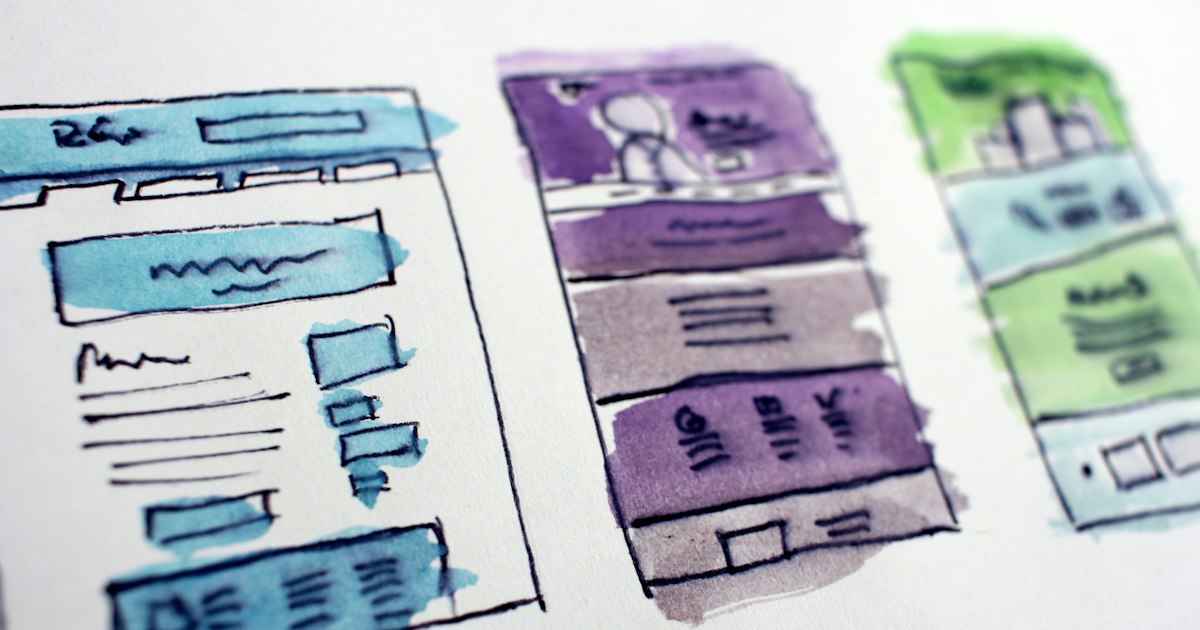
- Discovery and specification (1–2 weeks). A workshop, process mapping, scope of the first version, wireframes of the key screens. The cheapest point at which to change anything.
- Design (1–2 weeks). Screen design, prototype, sign-off on the look.
- Development in iterations. Backend, app, integrations. A demo of the work in progress every 1–2 weeks, not a big reveal at the end.
- Testing. Internal QA first, then testing with you on real data and devices.
- Launch. Deployment to the server and, for mobile apps, release in the App Store and Google Play.
- Operations and further development. Monitoring, fixes, updates and new features based on how people actually use the app.
Realistic timelines: a simple web application 2–6 weeks, an MVP 2–3 months, a mid-complexity app 3–5 months, a complex system 6 months or more.
The biggest time savings are on your side. Written-down processes and priorities shorten discovery, and our guide on how to write a technical specification helps with that. During the project, set aside a few hours a week for feedback. Waiting for the client's decisions is the most common reason projects slip.
What to check when choosing a vendor
The difference between a good and a bad vendor often only shows after launch, when fixing things is expensive. So ask these questions upfront:
- Who owns the source code? You should, including access to the repository. “Don't worry about it, we keep it” is a red flag.
- Where will the app run, and whose accounts? Servers, domains and developer accounts in the App Store and Google Play should be in your name, or easy to transfer.
- How often will I see work in progress? Demos every 1–2 weeks are standard. A vendor who only shows the finished product is gambling with your money.
- What happens after launch? Who fixes bugs, who updates libraries, what support costs. For a one-time project, get this in writing separately.
- How are scope changes handled? Changes will come. Ask how they're priced and who decides on them.
- How can the cooperation end? Notice period, handover of code and data, documentation. A good vendor has a clear answer.
Be careful with offers that are far cheaper than the rest. A cheap app built without a specification or tests often needs a rewrite, and you pay for it twice. The reverse holds too: a high price alone doesn't guarantee quality. What matters is a transparent process.
With us, ownership of the source code is part of every plan. The commitment matches the delivery period (at least 3 months), after which the notice period is one month.
Summary
- A custom app pays off where the process is your competitive edge, where off-the-shelf tools fall short, or where per-user licences grow faster than the value.
- For standard processes, use off-the-shelf or no-code. It's faster and cheaper.
- Price ranges from tens to hundreds of thousands of crowns one-time, or from CZK 1,990 (web) and CZK 29,990 (mobile app) per month on a subscription.
- With a vendor, check code ownership, regular demos and clear terms after launch.
Want to know what your app would cost? The configurator gives you an estimate in two minutes. If you'd like to talk through a specific project, book a consultation: in 60 minutes with a developer and a PM we'll propose a solution, an estimate and a suitable plan. And if your focus is internal processes, take a look at internal company apps.